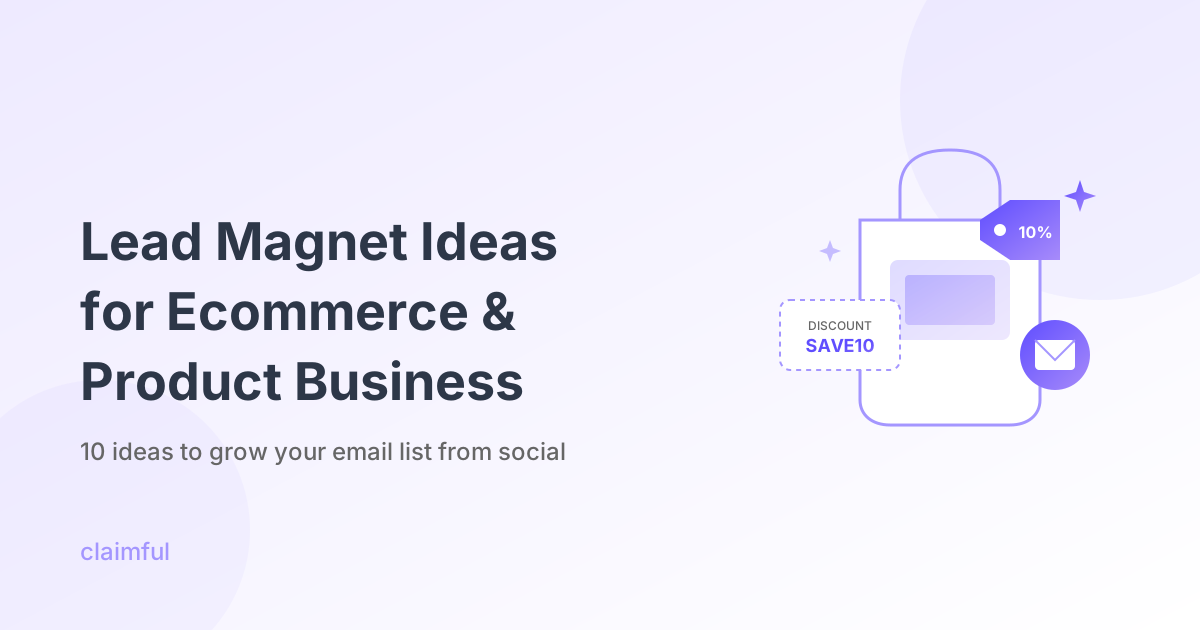
Lead Magnet Ideas for Ecommerce & Product Businesses
Grow your product business with these lead magnet ideas. From discount codes to style guides—proven strategies for ecommerce email list building.
You're selling products on Instagram. Your posts get likes, your Stories get views, but sales feel random. One day you get orders, the next day nothing.
The problem isn't your product—it's that you don't own your audience. Instagram decides who sees your posts. One algorithm change and your reach tanks.
Email changes that equation. When someone gives you their email, you can reach them directly. No algorithm. No hoping they see your Story at the right moment.
But how do you get those emails when you're selling through social media, without a full Shopify store or complex website?
Lead magnets. You offer something valuable—a discount, a style guide, early access—in exchange for an email address. Simple, effective, and perfect for product businesses selling through Instagram and TikTok.
This guide covers lead magnet ideas specifically for ecommerce and product businesses, plus how to deliver them using just a link.
Selling products online? See how Claimful could help you capture emails via simple bio links: Claimful for Ecommerce & Product Businesses
Why Product Businesses Need Lead Magnets
Social media is where product discovery happens. But discovery doesn't equal purchase.
According to Shopify's data, the average ecommerce conversion rate is 1-3%. That means 97-99% of people who see your product don't buy on that visit. They might be interested, but not ready to purchase.
Without their email, you lose them. With their email, you can:
Remind them during sales. "Remember that sweater? It's 20% off this weekend."
Announce new products. Reach every interested person, not just the 10% who see your post.
Recover abandoned interest. Someone clicked but didn't buy? Follow up.
Build repeat customers. Email is the primary driver of repeat purchases in ecommerce. One-time buyers become loyal customers through email nurturing.
The best part? You don't need a full ecommerce website. A simple link in your bio can capture emails all day, every day.
What Makes a Good Ecommerce Lead Magnet
Not all lead magnets work for product businesses. Here's what does:
Immediately valuable. Discount codes work because the value is instant and clear. A 10% discount is worth something right now.
Related to purchase decisions. A size guide helps people buy confidently. A style lookbook inspires purchases. Connect your lead magnet to buying.
Creates urgency. "Early access to the spring collection" has a time element. "Exclusive discount" feels special.
Low friction. One email field, instant delivery. Product shoppers aren't filling out long forms.
10 Lead Magnet Ideas for Product Businesses
1. First Purchase Discount Code
The classic—and it works for a reason.
How it works: Offer 10-15% off the first order in exchange for an email. Deliver the code instantly.
Why it works: According to Shopify's data, discount code opt-ins convert at 15-25%. People understand the exchange immediately: email for discount.
Pro tip: Make the discount compelling but sustainable. 10% is standard. 15% feels generous without killing margins.
2. Size & Fit Guide
If you sell clothing, accessories, or anything with sizing, this is gold.
What to include:
- Detailed measurements for each size
- How to measure yourself accurately
- Fit photos on different body types
- Comparison to other brands
- When to size up vs. down
Why it works: Size uncertainty is the #1 reason people abandon fashion purchases. Solving it builds trust and reduces returns.
3. Style Quiz with Recommendations
Interactive and personalized—people love quizzes.
How it works: 5-7 questions about their style preferences. Results include product recommendations. Capture email to deliver results.
Why it works: Personalization increases conversion rates by 20% according to McKinsey. Plus, you learn what each subscriber likes.
4. Product Care Instructions
Help customers get more life out of their purchase.
What to include:
- Washing/cleaning instructions
- Storage recommendations
- Common mistakes to avoid
- How to refresh or restore items
- When to replace vs. repair
Why it works: Shows you care about the product experience beyond the sale. Builds long-term loyalty.
5. Styling Lookbook
Visual inspiration for how to use your products.
What to include:
- Multiple styling options per product
- Outfit combinations
- Seasonal variations
- Occasion-specific styling
- Photography that inspires
Why it works: People buy when they can visualize themselves using the product. Lookbooks bridge that gap.
6. Seasonal Gift Guide
Perfect for holiday sales and gift-giving occasions.
What to include:
- Gift ideas by recipient (for her, for him, for kids)
- Price range categories
- Bestsellers and customer favorites
- Gift wrapping and shipping cut-offs
- Bundle suggestions
Why it works: Gift buyers need guidance. They're often purchasing outside their usual categories. A guide simplifies their decision.
7. Early Access to New Collections
Turn product launches into email-building events.
How it works: "Join the list for early access to our spring collection." Subscribers see new products before they're public.
Why it works: Exclusivity feels valuable. People want to be "in the know." And you build launch-ready email lists.
8. Unboxing Experience Checklist
For higher-end products where the unboxing matters.
What to include:
- What's in the box
- Setup or first-use instructions
- Care card information
- How to contact support
- Share your unboxing hashtag
Why it works: Sets expectations, reduces support requests, and encourages social sharing.
9. Product Comparison Charts
Help customers choose between your products or understand your offerings.
What to include:
- Feature comparisons
- Use case recommendations
- Price-value analysis
- Customer review highlights
- "Best for" scenarios
Why it works: Decision paralysis stops purchases. Clear comparisons help people choose—and buy.
10. Behind-the-Scenes Maker Story
For handmade, artisan, or founder-led brands.
What to include:
- Your origin story
- How products are made
- Materials sourcing
- Team introductions
- Values and mission
Why it works: People connect with stories. A personal brand story differentiates you from generic competitors.
How to Create Your Lead Magnet
Step 1: Start with what you have. Already have a size guide on your website? Turn it into a PDF. Already know your best styling tips? Write them down.
Step 2: Keep it simple. Discount codes need no design—just clear delivery. Guides can be 3-5 pages max. Lookbooks need good photos you probably already have.
Step 3: Brand it. Add your logo, colors, and website URL. Every page should clearly be from you.
Step 4: Make delivery instant. When someone enters their email, they should have the resource in seconds. No "check your inbox in 24 hours."
How to Deliver Without a Full Website
Here's where product businesses selling through social media have an advantage—you don't need a complicated setup.
Claimful lets you upload your lead magnet and get a shareable link. That link goes in your Instagram bio, TikTok bio, Pinterest pins, or anywhere else. When someone clicks, they enter their email and get instant access. You collect their contact info for future marketing.
No Shopify. No website builder. No coding. Just a link that works.
Where to share your link:
- Instagram bio — This is everything for product businesses. Your one link should capture emails.
- TikTok bio — Same strategy, growing audience.
- Pinterest pins — "Get our free style guide" in pin descriptions works well.
- Stories with link stickers — Direct path from content to email capture.
- Marketplace profiles — Etsy, Poshmark, etc. can often include links.
- Product packaging inserts — Brief mention: a card with your link can capture post-purchase emails.
Realistic Results for Product Businesses
Let's look at typical numbers.
Say you have 10,000 Instagram followers and you're offering a 10% discount code via your bio link.
According to industry benchmarks:
- 2% of followers click bio links (200 clicks/month)
- 15-25% enter their email for a discount (30-50 emails/month)
- Each email is worth $1-3 in monthly revenue (Klaviyo benchmark)
That's 360-600 new emails per year, worth $360-$1,800 in monthly revenue potential. From a link you set up once.
Scale that with better content, Story promotion, and TikTok, and the numbers grow quickly.
Mistakes Product Businesses Make
Discount too small. 5% doesn't motivate. 10-15% feels worthwhile.
Discount too big. 30% trains customers to wait for sales. Find the sustainable middle.
Only using discount codes. Not everyone responds to discounts. Style guides and early access attract different buyers.
Ignoring the follow-up. You captured an email—now what? Have a welcome sequence ready. Don't let new subscribers go cold.
Making it complicated. Multiple pages, forms, steps. People abandon. One click, one email field, instant delivery.
Next Steps
Here's your action plan:
-
Choose one lead magnet. Discount codes are easiest to start. Style guides work if you have good photos.
-
Create it this week. Discount codes take 5 minutes. Guides take a few hours.
-
Set up delivery. Upload to Claimful or your chosen platform. Get your link.
-
Update your bio. Replace your current link with your lead magnet link.
-
Promote in content. "Free style guide—link in bio!" "10% off—link in bio!"
-
Email your list. Have a welcome sequence. Send when you launch new products.
Product businesses that build email lists control their own sales. You're not dependent on algorithm changes or platform trends. When you launch something new, you reach your audience directly.
One link in your bio can change how your business works.
For more on lead magnets, check out our complete guide.
New to email collection on social? Read: How to Collect Emails on Instagram