7 Lead Magnet Ideas for Personal Trainers That Convert
Proven lead magnet ideas for personal trainers. Build your email list with workout plans, meal templates, and guides your audience wants.
You're a personal trainer. You know fitness. But getting new clients? That's a different skill—and usually involves awkward gym floor conversations or paying for ads that may or may not work.
What if potential clients came to you? What if they gave you their contact info before you even talked to them, because you'd already proven you could help?
That's what a lead magnet does. You create something valuable—a workout plan, a meal template, a guide—and share it for free. In exchange, people give you their email address. Now you can nurture that relationship until they're ready to train with you.
This guide covers seven lead magnet ideas specifically for personal trainers, plus how to create and deliver them.
Are you a personal trainer? See how Claimful is built for your workflow: Claimful for Personal Trainers
Why Personal Trainers Need Lead Magnets
The fitness industry is competitive. There are trainers everywhere. The question potential clients ask themselves is: why you?
The traditional answer is to hope they see you training someone at the gym, or hope your Instagram posts stand out, or hope word of mouth brings them in. That's a lot of hoping.
Lead magnets flip the dynamic. Instead of hoping people notice you, you create something useful and share it. People who download it have already experienced your value. They've seen how you think about fitness, how you structure programs, how you explain things. When they're ready for a trainer, you're not a stranger—you're the person who already helped them.
According to HubSpot's 2024 Marketing Report, 50% of marketers using lead magnets report higher conversion rates. For personal trainers, where trust and expertise matter, that edge is significant.
What Makes a Good Fitness Lead Magnet
Before the specific ideas, here's what separates lead magnets that work from ones that don't:
Solves an immediate problem. Not general fitness knowledge—something they can use today. "7-Day Workout Plan" beats "Principles of Progressive Overload."
Shows your approach. Your lead magnet should demonstrate how you train clients. If you focus on functional fitness, the lead magnet should reflect that. If you're strength-focused, show that.
Appropriate for beginners. Most people looking for trainers aren't advanced lifters. Create something accessible that doesn't assume expertise.
Easy to follow. Clear instructions, simple format, nothing confusing. If they can't figure out your free resource, they won't trust you with paid training.
7 Lead Magnet Ideas for Personal Trainers
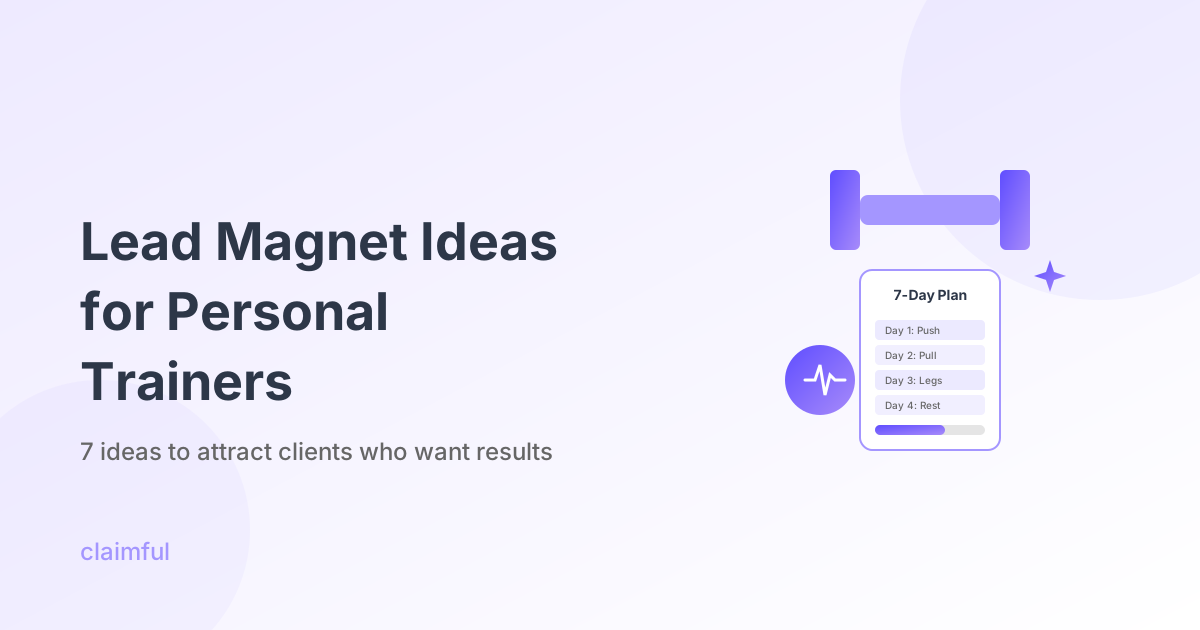
1. 7-Day Workout Plan PDF
The classic. A complete week of workouts people can follow on their own.
What to include:
- Daily workout breakdown (exercises, sets, reps)
- Rest day recommendations
- Warm-up and cool-down routines
- Exercise descriptions or links to demo videos
- Progression notes for the following weeks
Why it works: People want structure. A week is long enough to be valuable but short enough to be approachable. It gives them a taste of what training with you would be like.
Implementation tip: Make it achievable for beginners. An intimidating workout plan doesn't help—it discourages. You can always offer more advanced plans later.
2. Macro Calculator Spreadsheet
A simple tool that helps people figure out their calorie and macro targets based on their goals.
What to include:
- Input fields (weight, height, age, activity level, goal)
- Automatic calorie calculations
- Macro breakdown (protein, carbs, fat)
- Adjustment recommendations
- Brief explanation of why these numbers matter
Why it works: Nutrition confuses people. A calculator demystifies it and shows you understand the full picture—not just exercise.
Implementation tip: Include different goal options (fat loss, muscle gain, maintenance) so it's useful for various people. Add a section explaining how to adjust if progress stalls.
3. Exercise Form Guide with Photos
Visual demonstrations of key exercises with proper form cues.
What to include:
- Photos showing correct form (front/side views)
- Key form points for each exercise
- Common mistakes to avoid
- Modifications for beginners or limitations
- 10-15 foundational exercises
Why it works: Form is everything. People know they're probably doing exercises wrong but don't know how to fix it. This positions you as the detail-oriented trainer who prevents injuries.
Implementation tip: Use clear photos against a plain background. Include yourself in the photos—it builds personal connection and shows you practice what you preach.
4. Meal Prep Template
A weekly meal prep guide that makes healthy eating practical.
What to include:
- Weekly meal template (breakfast, lunch, dinner, snacks)
- Grocery shopping list
- Prep day timeline
- Simple recipes that work for meal prep
- Storage and reheating tips
Why it works: Everyone knows they should eat better. Few know how to actually do it consistently. A practical template removes the planning barrier.
Implementation tip: Focus on simplicity over gourmet. Meal prep needs to be realistic for busy people. 5-6 repeatable meals are more useful than 20 complicated recipes.
5. Client Progress Tracker
A spreadsheet or printable for tracking workouts, measurements, and progress over time.
What to include:
- Workout log (exercises, weights, reps)
- Weekly measurement tracking
- Progress photo schedule
- Goal setting section
- Notes and observations space
Why it works: What gets measured gets managed. A good tracker helps people see progress, which keeps them motivated. It also shows you care about results, not just showing up.
Implementation tip: Make it simple. Too many fields and people won't use it. The basics—weight, key measurements, workout performance—are enough.
6. 30-Day Fitness Challenge
A structured challenge that builds habits over a month.
What to include:
- Daily actions or workouts
- Progressive difficulty
- Rest days built in
- Tracking sheet
- Tips for staying consistent
Why it works: Challenges create commitment. A defined endpoint (30 days) feels achievable. Completing it builds confidence—and a relationship with you.
Implementation tip: Make day 1 easy. The goal is building momentum, not filtering out everyone who isn't already fit. Gradually increase difficulty so people feel their progress.
7. Quick Home Workout Guide
A collection of workouts that require minimal or no equipment.
What to include:
- 15-20 minute workout options
- Bodyweight-only exercises
- Minimal equipment alternatives (resistance bands, dumbbells)
- Different workout types (strength, cardio, mobility)
- Modifications for different fitness levels
Why it works: Gym intimidation is real. Home workouts are more accessible. This shows you meet people where they are, not where you think they should be.
Implementation tip: Include genuinely effective workouts, not just filler. If someone does your home workout and feels challenged, they'll trust your expertise.
How to Create Your Lead Magnet
Here's the practical process:
Step 1: Pick one idea. Don't try to create multiple at once. Choose based on what you already know or what clients ask about most.
Step 2: Outline the content. What needs to be included? Write it all down, then cut to what's essential.
Step 3: Create it. Use Canva for PDFs—they have templates for fitness guides. Use Google Sheets for calculators and trackers. Plain and clear beats fancy and confusing.
Step 4: Add your branding. Logo, colors, contact info. It should be obvious who created this.
Time investment: Most fitness lead magnets can be created in 2-4 hours. You know this content—you're just packaging it.
How to Deliver and Promote
Once created, you need a way to actually deliver your lead magnet and collect emails.
Traditional approach: build a landing page, connect forms to email software, set up automations. It works but requires technical setup most trainers don't want to deal with.
When we built Claimful, we focused on making this simple. Upload your PDF or spreadsheet, customize your page if you want, get a shareable link. When someone enters their email, they get instant access. You collect their contact. No website needed, no complex integrations.
For other options, check our lead magnet tool comparison.
Where to share your link:
-
Instagram bio. Prime real estate. When someone checks your profile, your lead magnet is right there. See our Instagram email collection guide for specific strategies.
-
Gym marketing. QR codes on flyers, business cards, posters. People scan and get immediate value.
-
Stories and Reels. Show snippets from your lead magnet. "Made a free 7-day workout plan—link in bio."
-
Client referrals. "Know someone who's not ready for full training? Here's my free workout plan to get them started."
-
Email signature. Every email you send becomes a lead opportunity.
Realistic Results
Let's look at actual numbers.
Say you have 5,000 Instagram followers (reachable for most trainers). According to Hootsuite, engagement rates average around 3-5%. Let's use 3% conservatively.
If you promote your lead magnet in a post:
- About 150 people might engage
- Maybe 30% click through to your link (45 clicks)
- At an 18% conversion rate (Unbounce's 2024 benchmark), you get about 8 new emails
If you promote consistently—twice a week across posts, Stories, and Reels—that's roughly 65 new emails per month.
Over a year, that's nearly 800 potential clients who raised their hand. If even 5% become paying clients, that's 40 new clients you generated from content you created once.
The math works when you think long-term and stay consistent.
Common Mistakes to Avoid
Too advanced. Your lead magnet should work for beginners. Advanced clients already know what they're doing—they're not your target market.
Too long. A 3-page workout plan beats a 30-page training manual. People want quick wins, not reading assignments.
Generic content. "Workout tips" is vague. "7-Day Push/Pull/Legs Program" is specific. Specific attracts the right people.
No follow-up. Someone downloads your workout plan—then what? Have a welcome email ready. Check in a week later. Build the relationship.
Only promoting once. Most of your followers didn't see your launch post. Mention your lead magnet regularly, not just when you first create it.
Next Steps
Here's your action plan:
-
Pick one idea from this list. Choose based on what you already know or what clients ask about.
-
Create it this week. Block 3 hours. Outline, write, design, export.
-
Set up delivery. Upload to Claimful or your chosen platform. Get your link.
-
Add it everywhere. Bio link, email signature, business cards, gym flyers.
-
Promote consistently. Mention it in content 2-3 times per week for at least 30 days.
The trainers building their client base online aren't doing anything complicated. They're just creating value and sharing it consistently. Your turn.
Ready to create your lead magnet? Get started with Claimful—upload your workout plan or template and get a shareable link in 60 seconds.
For more on lead magnets, check out our complete guide.