
How to Use Lead Magnets to Get Clients in 2026
Learn how to use lead magnets to get clients in 2026. Attract qualified prospects, demonstrate expertise, and convert downloads into paying customers.
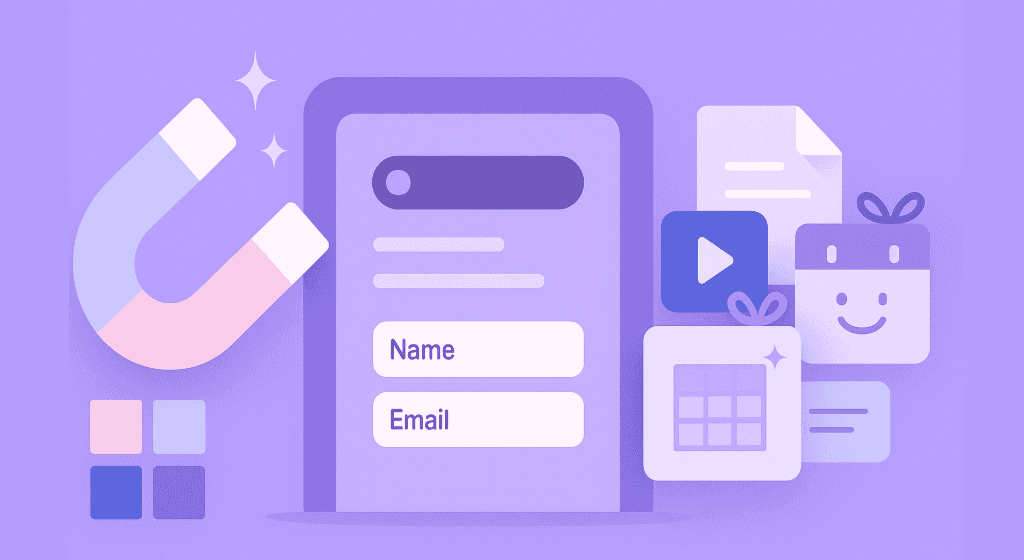
Imagine you spent $2,000 on paid ads last month.
You got 51 clicks. A handful of people filled out a contact form. Two turned into a discovery call. And if you're lucky... one became a paying client.
Usually that's not a great ROI on your money or time. Client acquisition is expensive. And it's getting harder.
Luckily there is a smart way to grow your brand and get new clients: giving away value before you ask for anything in return.
This isn't about building a massive email list only for the sake of it. It's about creating trust and authority for your brand that will attract new clients and turn prospects into buyers. And we are about to cover everything you need to know on how to do it with simple, effective lead magnets.
👋 If you're already sold on lead magnets and want to get started quickly and easily, we're here to help. We will help you get started with both lead magnet creation and lead magnet delivery. Get started free →
Here's what we'll cover:
- What are lead magnets and how do they work
- How lead magnets get you clients
- What types of lead magnets work best
- How your lead magnets can strike "The Interest Nerve"
- How to create quality lead magnets fast
- How to deliver your lead magnets in 60 seconds (without complex tools)
- How to follow-up and nurture your leads properly
What is a Lead Magnet?
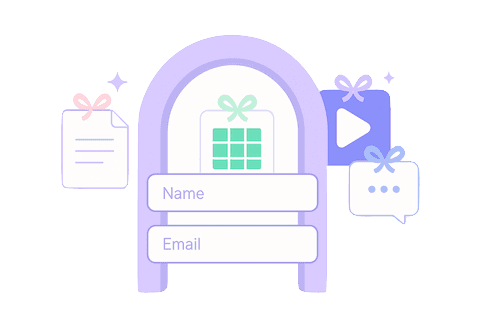
A lead magnet is valuable content you give away in exchange for someone's contact details, usually their email.
Think of it like value wrapped and stored behind a gate. The gate opens when someone fills in their information. It could be a pricing guide. A template. A calculator. A free consultation.
But here's the real point: lead magnets aren't just about collecting emails. They're about demonstrating trust and credibility.
When someone downloads your pricing guide or uses your calculator, they experience your expertise firsthand. This builds trust faster than any sales pitch. And trust converts.
Email marketing returns $36 for every $1 spent on average. That's a 3,600% ROI. Compare that to paid ads: $2.80 per dollar. Email wins by 12X.
When someone trusts you and is ready to buy, email gives you direct access to make your offer. No algorithm deciding if they see it. No hoping they remember your name. Just you and the prospect.
Why Lead Magnets Work for Getting Clients
Nobody hires someone they don't trust. That's the problem lead magnets solve.
When someone doesn't know you, they need proof you can help them. A good lead magnet demonstrates exactly that—it gives them a quick win and shows what working with you would be like.
1. They filter for qualified prospects
When someone downloads your pricing guide, they're thinking about pricing. When they grab your planning template, they're actively planning something.
You're not chasing random people anymore but attracting prospects who are already dealing with the problem you solve. That's qualification happening automatically.
2. They build trust through proof
Your lead magnet is proof you know what you're talking about.
If your free resource solves a small problem effectively, prospects assume you can solve their bigger problems too. You've already demonstrated competence.
3. They create reciprocity
When you give someone something valuable for free, people feel a natural inclination to give back. That's how we are wired as human beings.
This psychological principle makes prospects more receptive to your follow-up offer. You helped them first, you have opened the dialogue and they have a positive image of you. Now they're open to helping you by becoming a client.
4. They work 24/7
One of the best aspects of lead magnets is how hands-off they are. Once set up, a lead magnet runs automatically.
While you're meeting with clients or taking time off, your lead magnet is capturing qualified prospects. Instead of spending hours creating hit or miss content, you create one valuable lead magnet for your customer profile, use an easy delivery service like Claimful to deliver it and you're good to go.
What Makes a Lead Magnet Convert to Clients
Most lead magnets fail because they optimize for downloads instead of conversions.
You'll see advice everywhere about building your email list. But a huge email list doesn't matter if nobody hires you.
Passive, generalist email lists don't convert. Specific lead magnets that attract warm prospects ready to buy do.
1. Solves One Specific Problem
Your lead magnet shouldn't try to cover everything. It should solve one pain point your ideal client has right now.
"10 Ways to Improve Your Marketing" is too broad. "How to Calculate Your True Customer Acquisition Cost" solves something specific.
The more specific your lead magnet, the more qualified your leads—and the more you can focus on actually delivering insight on one topic. Specific and concise lead magnets also tend to see far superior conversion rates than general and long form lead magnets.
In the case of lead magnets, quality trumps quantity.
2. Targets People Who Are Ideal Customers
If you charge $10,000 for brand consulting, your lead magnet should attract business owners who have $10,000 to spend. Same goes for the topic—choose topics where you have an actual edge and where you can deliver better results than most of your competitors.
3. Creates an Immediate Result
The best lead magnets give people value, fast.
A template they can use today. A checklist that saves them time tomorrow. A calculator that gives them clarity right now. When prospects see immediate value, they trust you with bigger problems.
4. Naturally Leads to Your Service
Your lead magnet should make your paid service the obvious next step.
If you're a website designer offering a "Website Audit Checklist," the natural next step is hiring you to fix what they found. If you offer social media management and give away a "Content Calendar Template," they'll realize they still need someone to create the content.
Position your lead magnet so it leads to a natural upsell that your leads will organically inquire about. Make yourself super easy to reach by adding all relevant contact information in the lead magnet as well.
5. Cuts through the noise
Going into 2026 and beyond it's easier than ever to access information. It's also more important than ever to let your own brand, identity and special skill set shine.
Being able to deliver unique, valuable content that actually feels personal and resonates on a human level is extremely valuable. Your customers don't want generalist quick fix answers. They want your unique and actionable insights.
Create something valuable once and you can reap the rewards for a long time to come. Valuable doesn't mean complex, it simply means helpful.
Types of Lead Magnets That Attract High-Quality Clients
Not all lead magnets are created equal. The format and style of your lead magnet will depend mostly on these factors:
- Who is your ideal target customer profile
- What kind of service are you trying to promote to them
- What is the urgency (i.e. in what time period you want to convert them to clients)
This will help you shape the angle of your lead magnet.
👋 Need help figuring out what lead magnet to create? We'll send you 3 custom lead magnet ideas tailored to your business, completely free of charge. Get free ideas →
For client acquisition, focus on these formats:
Downloadable Content (PDFs, Templates, Files)
Templates, guides, checklists, reports, worksheets.
Why they work for getting clients: They demonstrate your methodology in a tangible format. People see your thinking, your approach, your expertise.
Best for: Anyone comfortable creating written content.
Ideas on formats that work:
- Contract templates
- Email sequences
- Project timelines
- Budget calculators
- Proposal frameworks
- Any tool that the client can use in their workflow
Pros:
- Fast to create
- Easy to share anywhere
- Scale infinitely
- Work on all devices
Cons:
- Less personal than consultations, trainings or video and audio content
- Need decent design to look professional
Pro tip: If you already have a simple document like a template, checklist or similar that you actually use in your day to day work, that could work wonders if it resonates with your clients.
Video & Audio Content
This includes training videos, recorded webinars, audio guides, mini-courses.
Why they work for getting clients: Build trust faster through personal connection. People hear your voice, see your face, feel like they know you before you even talk.
Best for: People comfortable on camera or recording audio that have an audience that values video or audio content.
Ideas on formats that work:
- 15-minute training videos
- Recorded Q&A sessions
- Screen recordings showing your process
- Audio guides for on-the-go professionals
Pros:
- Build trust quickly
- Personal connection
- Potential for higher perceived value
- Great for demonstrating complex processes
- Over 50% of B2B buyers now prefer video over written content
Cons:
- Usually take longer to produce
- Informative angle, unable to tap into "tool" territory like checklists or templates
- Text can be more convenient and accessible to some segments
Free Consultations & Audits
Strategy calls, assessments, reviews, evaluations.
Why they work for getting clients: Highest conversion rate by far. You're demonstrating expertise through direct interaction. Personal, customized, powerful.
Best for: High-ticket services where trust and fit matter.
Proven concepts:
- Free strategy calls
- Website or SEO audits
- Business assessments
- Financial plan reviews
- Portfolio reviews
Pros:
- High conversion percentage
- Pre-qualifies serious prospects
- Builds deep trust through personal interaction
- Real-time objection handling
Cons:
- Time intensive
- Doesn't scale infinitely
- Requires sales skills
This is usually the go-to power move for consultants, coaches, agencies, professional services. You're not just showing expertise—you're proving it live.
Combining Lead Magnets to Create A "Magnet Funnel"
What can work incredibly well is a so-called "magnet funnel". This combines lead magnet types where the user is slowly warmed to becoming a paid client.
For example: lead downloads low threshold checklist PDF → this upsells them organically to a 15-min free consultation → which leads to a signed client.
This gives the lead time to form a warm relationship with your brand and at the point of the consultation call they have received a lot of value upfront.
How to Hit Your Client's "Interest Nerve"
Your lead magnet needs to solve a problem your prospect is dealing with right now. Not "someday" problems or nice to have solutions.
That's what we like to call the interest nerve—the specific pain point that makes someone stop scrolling and think "I need this."
Most lead magnets miss it completely. They're too broad and generic.
- "10 Marketing Tips" doesn't hit a nerve. "How to Calculate Whether Your Last Campaign Actually Made Money" does.
- "Photography Guide" doesn't hit a nerve. "Wedding Shot List: Never Miss a Critical Moment Again" does.
The difference? Specificity.
When someone sees a lead magnet that addresses their exact situation, they recognize themselves in it immediately. That recognition is what converts.
Generic content attracts generic leads who download everything and buy nothing. Specific content attracts fewer people—but they are the people you want to attract. The ones actively dealing with the problem you solve.
That's the interest nerve. Hit it, and your lead magnet works. Miss it, and you're just adding to the pile of forgettable PDFs nobody opens.
How to Create Your Lead Magnet
Creating a lead magnet doesn't have to take weeks. Don't overthink it—focus on quality over quantity and providing something of real value.
Here's the process:
Step 1: Identify the One Problem to Solve
Look at your last client conversations. What questions do prospects always ask? What do they struggle with before hiring you? What stops them from moving forward?
Pick the single most common, painful, or urgent problem.
If you're a brand consultant and prospects always ask "How do I know if I need a rebrand?", you could create a "Brand Health Assessment" that answers that question.
If you're a pricing consultant and everyone struggles with how to price their services, you could create a "Service Pricing Calculator."
One problem. One solution.
Step 2: Choose Your Format
Based on the problem, pick the format that delivers the solution fastest:
- Is it a decision? → Checklist or assessment
- Is it a process? → Template or step-by-step guide
- Is it calculation? → Worksheet or calculator
- Is it knowledge? → Short guide, cheat sheet or consultation
Don't make this complicated. A Google Doc template is often more valuable than a fancy designed PDF. A simple, approachable worksheet is often more valuable than a complex, custom coded calculator. Keep it simple. Focus on what your clients need.
Pro tip: Tools > actionable advice > information. In our experience the most efficient form of lead magnet is:
a) one that your lead will implement to their workflow, or b) one that transforms the client's business for the better.
Focus on these two when creating your lead magnet and your future clients will love you for it.
👋 Need help with lead magnet creation? We'll send you 3 custom lead magnet ideas tailored to your business, completely free of charge. Get free ideas →
Step 3: Create the Content
Create the lead magnet for someone who's never met you. Be clear and specific. Skip the theory and get straight to the practical steps.
- For a template: Fill it out with examples so people understand how to use it.
- For a checklist: Make it sequential and comprehensive.
- For a guide: Break it into clear sections with real examples.
- For a worksheet or calculation: Keep inputs simple and results immediately useful.
Always keep it:
- Valuable – Real expertise, not generic tips
- Actionable – They can implement it immediately
- Professional – Quality signals you're worth hiring
Think of it as an appetizer, not the full meal. Give real value, but leave room for your paid service to deliver the complete solution.
Step 4: Simply Stylish Does It
For most small businesses a clean, minimal look is usually all you need. You can make use of free tools like Canva for PDFs, Google Sheets for calculators or Google Docs for templates.
Add your logo. Use consistent fonts and colors. Also include your contact info and clear call to actions.
Requirements:
- Clean, readable layout
- Branded with your logo, visual style and colors
- Professional quality throughout
- Naturally leads to your service
- Focus on the value (a simple valuable tool beats a 20-page "nice to know" eBook any day)
But don't spend days on design. Your content matters more than your fonts. A well-organized Google Doc beats a beautifully designed but useless PDF.
Step 5: Set Up Delivery
Now moving on to what is perhaps the most important part in the process. You can't manually email files to hundreds of people. You need automation.
What you actually need:
- Hosting for your file
- Automatic email capture
- A shareable link that works anywhere
Most people overcomplicate this step. They think they need a full email platform, landing page builders, website integrations. That's overkill when you're just starting or need something simple.
That's why we created Claimful. We are a simple lead magnet delivery platform that gets you started in 60 seconds. You just upload your file or add a link to your content. You get a shareable URL.
Share that link anywhere you interact with potential clients: your website, social media bios, business cards with QR codes, email signature and networking events.
When someone enters their email, they get instant access to your lead magnet. You collect their contact info automatically and on autopilot.
This approach works for any business:
- Accountants sharing tax planning guides
- Real estate agents offering market reports
- Consultants providing assessment tools
- Coaches distributing templates
- Creators looking to engage with their audience outside of their platform like Instagram, YouTube or TikTok
We know we are biased, but we truly believe Claimful is one of the easiest ways to get started with lead magnets. Read more about the plans we offer and get started in minutes →
Step 6: Promote Your Lead Magnet
Now that you got your lead magnet set up it's time to start promoting it. The best place to start is where you already have organic traffic coming in like your website or social media channel.
Distribution channels include:
- Social media bios and posts
- Email signature
- Website homepage or service pages
- Business cards with QR codes
- Networking events and conferences
- LinkedIn profile
- Direct messages when people ask questions
- Guest posts or interviews
The key principle: consistency beats perfection.
Following Up to Convert Leads to Clients
This is where many fail. They create a great lead magnet, people download it, and then... nothing happens. Getting someone's email is just the beginning. The real work is converting that lead into a paying client.
Deliver Instantly, Always
When someone downloads your resource, they should get it instantly. No waiting. No "check your email." Immediate access. This is where tools like Claimful come in handy.
Best Practices for Follow-Up
There's no one-size-fits-all sequence, but these principles tend to work across industries:
Follow up within 24 hours. Send a personal email asking if they found the resource helpful and if they have questions. Keep it conversational, not salesy.
Provide additional value before pitching. Send follow-up content that builds on your lead magnet. If they downloaded a template, send tips on how to use it effectively. If they grabbed a checklist, share a case study of someone who used it successfully. Educate first, sell later.
Frame your offer as the next logical step. When you do introduce your services, position it naturally: "Now that you've used the [lead magnet], you might be wondering about [next logical step]. That's exactly what I help clients with." Then include a simple way to book a call or consultation.
Use social proof strategically. Share a case study or testimonial from a client who had similar challenges. This helps prospects see themselves in your previous clients' success stories.
Stay helpful over time. Continue providing value through regular emails. Share insights, tips, and resources related to their problem. Not every email needs a call-to-action. The goal is to stay top-of-mind so when they're ready to hire someone, you're the obvious choice. Remember to provide a clear way for users to opt-out from your emails as well.
Personalize when you can. If you recognize someone's name or company, reference something specific about their business or situation. This kind of personalization dramatically increases response rates.
Don't give up too soon. Keep providing value and making offers, just space them out appropriately. The key is consistency and value.
Common Lead Magnet Mistakes
Finally, let's round up with some common mistakes that you should avoid when creating lead magnets:
Making It Too Long
A 50-page ebook feels impressive. But most people won't read it. Low completion means low conversion.
Keep focused and consumable. Better to have them finish 10 pages and want more than abandon 50 pages halfway through.
Too Generic
"General tips" doesn't position you as THE expert to hire for their specific need.
Niche down. Specific topics attract better-quality clients who are ready to pay for specialized help.
Poor Design Quality
If free content looks unprofessional, prospects won't trust you with paid work.
You don't need fancy. You need clean, branded, and error-free.
Minimum standard: Would you feel comfortable handing this to a potential client in person? If not, improve it.
No Clear Path Forward
This is the biggest mistake.
You collect an email, deliver the magnet, then nothing. No follow-up. No next step. No offer.
Every magnet needs a clear path to your paid service. Build that journey before you launch.
Not Promoting Enough
Creating it once and posting it once won't work.
Promote consistently across all your channels for at least 90 days before judging results. Most businesses quit promoting after a week. Then they wonder why lead magnets "don't work."
Wrong Balance
Too much free value: No reason to hire you - you solved everything. Too little value: No trust built — looks like a thinly veiled sales pitch.
The sweet spot: Give enough to demonstrate expertise and build trust, but leave the full implementation for your paid service.
Selling Too Hard
Your lead magnet should provide value first, sell second.
Nobody wants a 10-page sales pitch disguised as a guide. Lead with education and expertise. Trust comes first. Then the offer.
No Follow-Up System
Most conversions don't happen immediately after download. They happen in the follow-up emails over the next 2-4 weeks.
Set up 2-3 follow-up emails after someone downloads. Provide additional tips, answer common questions, and remind them how you can help further.
Measuring What Actually Matters
Vanity metrics like "500 downloads" sound impressive but don't pay your bills. For client acquisition, track metrics that relate to revenue.
What to Track
Download-to-client conversion rate: What percentage of people who download your lead magnet eventually become paying clients? This is your most important metric.
Calculate it: (Number of clients from lead magnet ÷ Total downloads) × 100
Revenue per lead: Take your total revenue from clients acquired through the lead magnet and divide by the number of downloads.
If 50 people download your lead magnet and 5 become clients paying $4,000 each, that's $20,000 in revenue from 50 downloads. Your revenue per download is $400. This helps you understand what you can spend on promotion.
Source performance: Track where your lead magnet downloads come from. Is it mostly from LinkedIn? Email signature? Website? Speaking events?
Double down on channels that bring qualified leads and stop wasting time on channels that don't convert.
Time to conversion: How long does it take from download to becoming a client? This helps you understand your sales cycle and when to follow up more aggressively.
When to Iterate
- Low downloads? Your offer or promotion needs work.
- Low email engagement? Improve your follow-up sequence.
- Low conversions to clients? Check your lead magnet quality or sales process.
Reality check: For most service businesses, one client from your lead magnet means positive ROI.
If you invest 8 hours creating it and one client pays you $5,000, that's $625 per hour. Better than most consulting rates. The ROI compounds as more clients come through the same magnet over months and years.
Your Next Steps
Building a client acquisition system with lead magnets isn't complicated. But it does require focused effort on the right things.
Start by creating one high-quality lead magnet that solves a specific problem your ideal clients have. Make it immediately useful.
Set up simple delivery so people can access it right away and you can capture their contact information.
Share it everywhere you already interact with potential clients. Then follow up consistently with value and soft offers.
Track what matters: conversion to paying clients, not just download counts.
Most importantly, don't overthink it. Your first lead magnet won't be perfect. But a good lead magnet that exists and gets used is infinitely more valuable than a perfect one that never launches.
- Timeline: As little as a few hours of focused work can get you an efficient lead magnet.
- ROI: One client pays for everything 10X over.
Start simple. One lead magnet. One clear problem solved. Promote consistently for 90 days. Track what brings paying clients.
Ready to set up your first lead magnet? Try Claimful free—upload your content, get your shareable link, start collecting leads. Set up in 60 seconds. No credit card required.